The Scottish Page
Scottish influence in metropolitan Vancouver was important from the very beginning of our post-native history . . . and that’s not counting the statue of Robert Burns in Stanley Park, nor our first purpose-built library, the Carnegie, paid for by Scotland-born U.S. industrialist and philanthropist Andrew Carnegie.
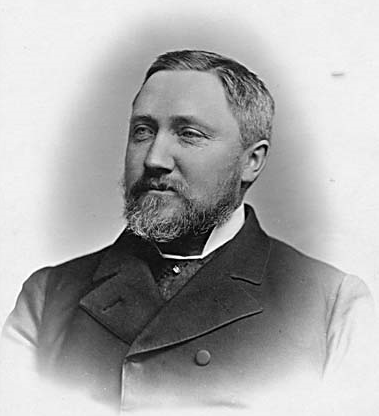
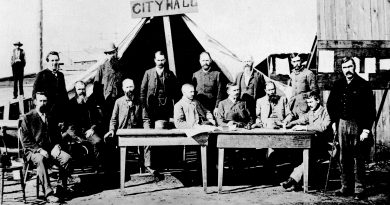
The first elected official in the lower mainland was a Scot. His name was James Mackie, and he was elected the first “warden” of Langley June 2, 1873. His clan was native of Banffshire. Vancouver’s first mayor, Malcolm MacLean (left), was a Scot and so was his opponent, Richard Alexander.
The St. Andrew’s and Caledonian Society of Vancouver was formed in 1886, the same year the city was. Here’s a startling statistic: On St. Andrew’s Day, November 30, 1887 the society held a grand St. Andrew’s Ball in McDonough Hall at the southeast corner of Hastings and Columbia. Of the 1,000 or so people who lived in Vancouver at the time, 400 attended. In a rainstorm.
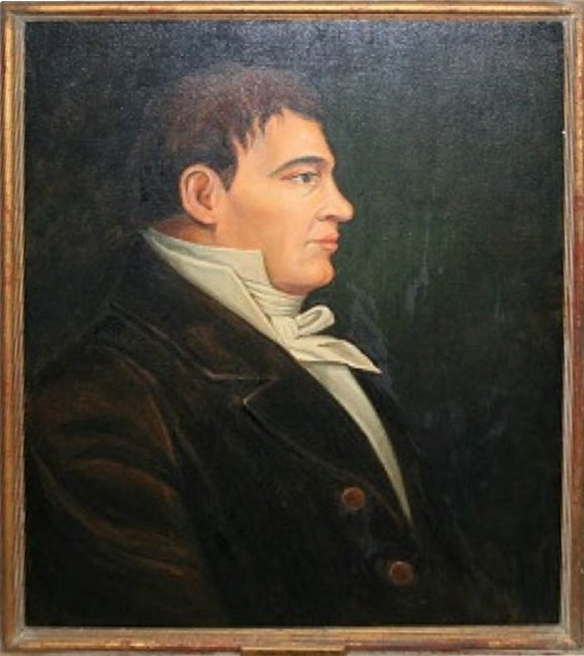
Descended from a noble Scottish Highland family, the Lovat Frasers, Simon Fraser (right) was the youngest son of Simon Fraser of Culbokie and Isabel Grant of Duldreggan. In September, 1773 the family emigrated to America aboard the Pearl and settled in Albany, New York. Simon Jr. was born in the small rural hamlet of Mapleton, Hoosick Township, New York on May 20th, 1776, the very eve of the American Revolution. Simon’s Loyalist father was captured at the Battle of Bennington and died a prisoner. His widowed mother fled with her family to Canada in 1784.
Robert Allison Hood’s name may be familiar to some of you. He was born in Scotland. In 1906 he came to Vancouver and became involved in financial and real estate business, but he also published several novels—most set in BC—and wrote articles and poetry. There is a big collection of his papers at UBC, much of it dealing with the early years of the St. Andrew’s and Caledonian Society. One of the items, from 1918, is a rhyming poem pleading with members of the society who owe dues to pay up.
A fellow named William Duncan, born in Scotland in 1882, came here and began work as a commercial fisherman. He established a locally famous fishing bar in Langley. He was renowned for having landed a sturgeon weighing 725 pounds.
The first white person to settle in what is now Stanley Park was a Scot, a printer named Jimmy Sievewright.
John Murray, Sr. was born in Ireland of Scottish parents. He was a lance-corporal in the Royal Engineers, and he and his wife Jane Fuller were the first settlers in Port Moody, on his sapper’s land grant. His son, John Murray Jr., known as “Mr. Port Moody”, was responsible for naming the streets of the municipality.
Many local place names are here courtesy of the Scots.
Dollarton was named for Captain Robert Dollar, born in Scotland in 1844.
Ewen Slough. After Alexander Ewen, an early cannery owner. A dour Scot, he was reputed never to have laughed.
West Vancouver’s first white settler, John Lawson planted holly by the side of the “burn” flowing across his property. Putting the two words together, he coined “Hollyburn” as the name for his place.
Iona Island. Called McMillan Island after a pioneer settler, Donald McMillan, until he himself renamed it Iona, after the island where St. Columba in 563 began Christianizing the Scots.
An early resident, Russell Macnaghten, Professor of Greek at UBC, named part of West Vancouver after Dundarave Castle in Scotland, the ancestral home of Clan Macnaghten. Dundarave comes from a Gaelic word having reference to a two-oared boat (and is pronounced by the Scots to rhyme with “have,” not “rave”).
Tom Alsbury, mayor of Vancouver from 1959 to 1962, was born in Edinburgh, our first mayor to have been born in the 20th century. (1904)
In 1905 when the B.C. Electric built a station on its Steveston interurban line at what is now West 41st Avenue in Vancouver, the company’s general manager called on a young Scottish couple named MacKinnon who had recently settled in the district and invited Mrs. MacKinnon to name the new station. She adapted the name Kerrisdale from her old family home, Kerrydale, in Gairloch, Scotland. Kerrydale means “little seat of the fairies.”
Senator Tom Reid came to Surrey from Scotland. He was a Liberal M.P. for New Westminster and later a senator. Tom Reid was a Surrey pioneer. He gave the municipality land that is now Bear Creek Park. The Senator played the bagpipes, sometimes at special events in Parliament.
The manager of Vancouver’s first Bank of British Columbia branch was James Cooper Keith, a native of Aberdeen. He later became president of the Board of Trade and reeve of North Vancouver. Keith Road in North Vancouver was named after him.
Also born in Edinburgh: Lily Laverock, a remarkable woman who was the first female newspaper reporter in Vancouver and, more importantly, for more than 20 years worked as an impresario here (mostly in the 1920s and ’30s), bringing in an astonishing array of world famous performers: Jascha Heifetz, Fritz Kreisler, Dame Nellie Melba, Maurice Ravel (as pianist), Pablo Casals, Beniamino Gigli, the Ballet Russe de Monte Carlo and more and more.
The Marine Building has a Scottish element. The 12 signs of the zodiac are worked into the floor, originally made of corkoid, or “battleship linoleum,” manufactured in Scotland by a firm that specialized in producing similar floors for luxury ocean liners. In 1989 the floor was replaced and replicated in marble.
You may recall that the Chinatown Lions’ Club began a habit of holding an annual Burns dinner, complete with haggis served with a sweet and sour sauce.
The names of Scots pepper our history: John Linn, after whom Lynn Valley is named (and misspelled) . . . James McGavin of bread fame . . . John McLagan, newspaper publisher, the Vancouver Daily World . . . Butcher James Inglis Reid, “we hae meat that ye can eat” . . . Andrew Roddan, United Church minister . . . William Irving, boatbuilder, whose home—Irving House in New Westminster—is an historic treasure . . . James Sinclair, the late federal fisheries minister, for whom Sinclair Centre in downtown Vancouver is named. He was also the father of Margaret Sinclair . . . and the son of James Sinclair of Caithness, Scotland, who came to Vancouver about 1910 and became the first principal of Vancouver Technical School . . . William Lamont Tait, whose Glen Brae mansion in Shaughnessy is now Canuck House, a hospice for children . . . broadcaster Jack Webster . . .
In April, 1916, the first congress was held of the new British Columbia Chess Association, the venue being Vancouver. The winner of the tournament was entitled to be called the “Chess Champion of British Columbia” and hold the championship shield, besides taking a gold medal as first prize. Mr. J.M. Ewing, a Scot by birth, was the winner on this first occasion.
The lions in front of the Vancouver Art Gallery were sculpted in 1910 by John Bruce, a Scot. Each weighs 15 tonnes; cost was about $8,000 for the pair. It’s said that Bruce halted the stone cutting when the money ran out, leaving the mane, nose and ears of the 15-ton lions unfinished.
George Black, pioneer butcher and hotelier, was born in Aberdeen. He was called “The laird of Hastings,” who always wore highland dress to dances, and also imported the area’s first race horses. He used to race them down Granville Street.
John Davidson, another Aberdeen man, was a botanist who started the famous gardens at Essondale, now Riverview Hospital.
And then there’s Jimmy Cunningham, stonemason. He was born in 1878 on the Isle of Bute, Scotland. Jimmy came from Scotland in 1910, then served in WWI with the Canadian Expeditionary Force. He worked extensively as a stonemason, including work at UBC, Vancouver homes, pools at Lumberman’s Arch, 2nd and Kitsilano beaches, the Empress Hotel and the Banff Springs hotel. In 1917 he began work on the Stanley Park seawall. In 1931 he was named master stonemason for the Vancouver Parks Board with a special task: to secure Stanley Park’s shores. He retired in 1955, but kept coming down (once in his pyjamas!) to keep an eye on the wall’s progress until his death September 29, 1963. Here’s a story we treasure: Jimmy built a low stone wall around his home, later learned the improvement would raise his taxes $4 a year. “My wife and I went out and tore the whole blooming thing down.”
Top Image Courtesy: The Canadian Encyclopedia