|

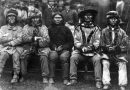
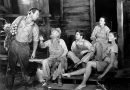
Five First Nations Men, Circa 1860 - City of Vancouver Archives, A-6-150
Chronology
[1757 - 1884] [1885
- 1891] [1892 - 1899]
[1900 - 1905] [1906
- 1908] [1909] [1910]
[1911] [1912]
[1913] [1914]
[1915] [1916]
[1917] [1918]
[1919] [1920]
[1921] [1922]
[1923] [1924]
[1925] [1926]
[1927] [1928]
[1929] [1930]
[1931] [1932]
[1933] [1934]
[1935] [1936]
[1937] [1938]
[1939] [1940]
[1941] [1942]
[1943] [1944]
[1945] [1946]
[1947] [1948]
[1949] [1950]
[1951] [1952]
[1953] [1954]
[1955] [1956]
[1957] [1958]
[1959] [1960]
[1961] [1962]
[1963] [1964]
[1965] [1966]
[1967] [1968]
[1969] [1970]
[1971] [1972]
[1973] [1974]
[1975] [1976]
[1977] [1978]
[1979] [1980]
[1981] [1982]
[1983] [1984]
[1985] [1986]
[1987] [1988]
[1989] [1990]
[1991] [1992]
[1993] [1994]
*******************************************
You'll note that these years include events for which we don't have
a specific date. If YOU know the
specific date of an event shown there, please
notify us . . . and cite the source! Many thanks!
*******************************************
1757
This year is sponsored.
June 22 George Vancouver
was born in King's Lynn, Norfolk.
1791
This year is sponsored.
April 1 HMS Discovery,
Capt. Vancouver's ship, sailed from Falmouth to explore the Pacific
coast of North America.
July 5 Spanish explorer
Lieutenant Jose Maria Narvaez, the first European to see this area
(he beat George Vancouver by a year), anchored west of Point Grey
and explored the mouth of the Fraser River.
1792
This year is sponsored.
April 30 HMS Discovery,
Capt. Vancouver's ship, enters the Strait of Juan de Fuca.
June 13 Vancouver enters
and explores Burrard Inlet, which he names Burrard's Channel.
June 22 Captain Vancouver
and Spanish Captain Dionisio Galiano, each at the head of an exploring
expedition, are startled to meet each other at what is now English
Bay. The two men hit it off, and Vancouver named Spanish Banks as
a tribute.
1808
This year is sponsored.
July Simon Fraser and
his men, who have just descended the river that will later be named
for him, explore the native village at Musqueam. They are chased
off by men of the tribe, and retreat back up the river.
1816
This year is sponsored.
The Nine O'Clock Gun is made
by H & C King in Woolwich.
1824
This year is sponsored.
James Macmillan of the Hudson's
Bay Company, with a party of men, struck out into the interior of
the province from the mouth of Surrey's Nicomekl River. They went
up the Nicomekl until their boats could go no farther, then portaged
to the Salmon River, which flows into the Fraser about 50 kilometres
east of its mouth. MacMillan marked a tree at that location—he called
it the Hudson's Bay Tree—and when he returned two-and-a-half years
later found that tree and built the first Fort Langley by it.
1825
This year is sponsored.
March 19 The Hudson's
Bay Company opened Fort Vancouver on a bluff above the north bank
of the Columbia River where the city of Vancouver, Washington is
now located, directly across the river from Oregon State. The fort
becomes the company's western headquarters. It's situated on the
north bank of the Columbia because it's thought that river would
eventually become the border between Canada and the U.S.
1827
This year is Sponsored
July 30 Construction
on the first Fort
Langley begins.
1833
This year is sponsored
February 20 James Murray
Yale took command of Fort Langley and a Hudson's Bay Company farm
was established at Langley Prairie. The farm will become very successful,
shipping salted salmon to Hawaii.
1834
This year is sponsored
Toronto incorporated (as York).
1835
This year is sponsored
October The Hudson's
Bay Company steamship Beaver leaves England for Burrard Inlet.
1836
This year is sponsored
April The Beaver arrives
from England, six months after leaving. It is the first steamship
to reach the Pacific Ocean.
1838
This year is sponsored
June 28 Victoria crowned
Queen, succeeding King William IV.
1843
This year is sponsored
July The Hudson's Bay
Company establishes Fort Camosun at the southern end of Vancouver
Island. By December it will be known as Fort Victoria.
1851
This year is sponsored
Captain Alexander McLean settled
at Pitt Meadows.
1853
This year is sponsored
The first dairy farm in Greater
Vancouver was operated in Ladner by Alexander McLean. After being
flooded out in 1853 McLean moved his family and their 50 cows to
the west bank of the Pitt River in what is now Port Coquitlam.
1855
This year is sponsored
January 1 Ottawa incorporated.
1856
This year is sponsored
April 16 Governor James
Douglas announced the discovery of gold in British Columbia. Not
long after, the first of 25,000 American prospectors arrive.
Three cannon are shipped to
British Columbia from England as part of a larger shipment to the
provinces of Canada. One of them is today's Nine O'Clock Gun.
1857
This year is sponsored
John Gassy Jack
Deighton, born in Hull, Yorkshire, started working in B.C. as a
steamship operator in the late 1850s.
January 23 Vancouver,
Washington is incorporated.
December 28 Governor
James Douglas of Vancouver Island proclaims the Crown's control
of mineral rights on the mainland.
December 31 Ottawa declared
capital of Canada.
1858
This year is sponsored
August 10 A crew of
men under the direction of A.C. Anderson, Director of Road Operations,
starts British Columbia's first road construction; a road from Tsawwassen
Beach, south of Ladner, overland to Fort Langley.
November 19 Governor
Douglas proclaims mainland British Columbia a colony.
The government reserve that
later becomes Stanley Park is set aside.
1859
This year is sponsored
February 14 Queensborough
was proclaimed as the site of the new capital of British Columbia.
Later it will be renamed New Westminster. (Historical coincidence:
Oregon became a state on the same day).
June 13 Coal was discovered
at what was promptly named Coal Harbour.
The Royal Engineers arrived
in British Columbia. They will have a great impact on early Metropolitan
Vancouver, overseeing the construction of roads and bridges. The
Engineers contract to have the North Road built. It
exists today, the boundary between Burnaby and Coquitlam, and the
oldest road in metropolitan Vancouver.
By Christmas 1859, eight months
after arriving in New Westminster, the Royal Engineers had built
a theatre . . . The theatrical fare at the Theatre Royal, New Westminster,
was mostly light farces, comedies, minstrel shows, songs, dances
and skits. Our thanks to site visitor Malcolm Page for this item,
which may be the earliest record of entertainment in Metropolitan
Vancouver.
1860
This year is sponsored
July 17 New Westminster
was incorporated. It's the oldest incorporated municipality west
of Ontario.
Much of what is now Stanley
Park was logged in the 1860s.
1861
This year is sponsored
January 10 Col. Richard
Moody of the Royal Engineers named Lulu Island in Richmond in honor
of 16-year-old Lulu Sweet, a visiting member of a touring English
musical revue.
February 13 B.C.'s longest-lasting
newspaper published its first issue. It was New Westminster's British
Columbian. The paper folded in November, 1983 after more than 122
years.
This year is sponsored
August 18 Simon Fraser
dies.
October A Yorkshire
potter named John Morton saw a chunk of Burrard Inlet coal on display
in a New Westminster shop window and wondered if near that coal
there might be fine clay suitable for pottery. There was clay, but
of a quality suitable only for bricks, and so Morton and two associates—his
cousin Sam Brighouse and William Hailstone—preempted (November 3)
550 acres, at a price equivalent to $1.01 an acre, with a view to
becoming brickmakers. They spent, some thought, far too much money
for the remote Brickmaker's Claim, and one newspaper
report derisively described them as three greenhorn Englishmen.)
The three greenhorns built a cabin near the north foot
of today's Burrard Street and began to raise cows.
The native people, the original
inhabitants of this bountiful corner of the world, found their occupation
of the land ended, after thousands of years, with numbing speed.
A stone obelisk was erected
this year to mark the spot on the 49th parallel at Point Roberts
from which all survey work would proceeds eastward. The road running
directly north from this point was named Coast Meridian Road. Today
Coast Meridian runs through the city of Port Coquitlam.
Billy Barker found gold at
Williams Creek, and by 1870 more than 100,000 people had travelled
the Cariboo Wagon Road to reach the bustling town of Barkerville.
For a brief time Barkerville was the largest town in western Canada.
1863
This year is sponsored
The B.C. contingent of the
Royal Engineers was disbanded. Some return to England, some opt
to stay behind and these are given land grants. One of them is Sapper
John Linn, after whom Lynn Valley, etc., in North Vancouver is named
(and misspelled).
1864
This year is sponsored
November 9 The first
export of lumber from Burrard Inlet to a foreign port when more
than 250,000 board feet leaves for Australia.
1865
This year is sponsored
January 14 Seattle was
incorporated.
April 11 Burrard Inlet's
first telegraph message goes out from Moody's Mill on the North
Shore to New Westminster.
April 14 The first telegraph
message from the outside world arrives at Burrard Inlet, telling
of the assassination of U.S. President Abraham Lincoln.
July 30 The first religious
service is held on Burrard Inlet, conducted for the men of Moodyville
by the Rev. Ebenezer Robson, a Methodist.
August 15 The New Westminster
library is established with books donated by the Royal Engineers.
1866
This year is sponsored
August 6 The Crown Colonies
of Vancouver Island and British Columbia are united and will be
known as British Columbia. The capital is New Westminster. (That
will change in 1868).
1867
This year is sponsored
March 30 Alaska is sold
to the United States.
June On the south shore
of Burrard Inlet Edward Stamp begins—with British financing—Vancouver's
first major industry. Stamp's mill (it was at the north foot of
today's Dunlevy Street) built a flume from Trout Lake to its sawmill
to sustain its steam-driven machinery.
July 1 Canadian Confederation,
creating a new country away to the east called Canada, and naturally
inspiring thoughts it might eventually stretch from sea to sea.
September 30 The arrival—in
a rowboat—of John Gassy Jack Deighton. The Yorkshire-born
Deighton, with a complexion, said a chum, of muddy purple,
rowed into Burrard Inlet from New Westminster with his native wife,
her mother, her cousin, a yellow dog, two chairs and a barrel of
whiskey. With the help of workers from Stamp's Mill he builds the
Globe Saloon in, it is said, 24 hours.
1868
This year is sponsored
May 25 The capital of
the colony of British Columbia is moved from New Westminster to
Victoria.
July 18 The first marriage
among the non-native population of Burrard Inlet takes place: the
Rev. Edward White marries Ada Young and Peter Plant at Moody's Mill.
August 8 The purchase
by William and Thomas Ladner of 160 acres each on the banks of the
Chilukthan Slough is recorded at New Westminster.
December 10 In England
the second Earl Granville was named Secretary for the Colonies.
The township of Granville (Gastown), Granville Street, Granville
Island, etc., are all named for him.
1869
This year is sponsored
July Maximilian Maxie
Michaud arrived at Burrard Inlet. He walked to Vancouver from Montreal.
When he got here, aged about 30, he bought the New Brighton Hotel
from its owner, Oliver Hocking.
July 2 The first post
office in what is now the City of Vancouver opened. Postmaster was
Maxie Michaud. It was an unofficial post office, located
in the kitchen of his hotel.
Also in 1869
James A. Raymur took over Hastings
Sawmill from Capt. Edward Stamp. When he first cast eyes upon the
squalor and haphazardness of the mill and its surroundings, he gazed
about him in horror and delivered one of the great Vancouver quotes:
What is the meaning of this aggregation of filth? He
cleaned it up fast.
Gastown's first jail was two
cells built of logs. They stood in what is now Gaoler's Mews in
Gastown.
1870
This year is sponsored
March 10 Granville,
known colloquially as Gastown, came into being with government approval
of the townsite, which had been surveyed in February. The townsite
was named for the Earl Granville, colonial secretary at the time.
(In 1886 it will be renamed Vancouver.)
Also in 1870
The first salmon cannery was
built in New Westminster.
1871
This year is sponsored
February 10 John Linn,
one of Colonel Moody's "sappers" (the Royal Engineers who built
our first roads), received 150 acres of land in return for his military
service. Linn, who was described as a strapping Scottish stonemason,
settled with his wife and six children at the mouth of a creek on
the north shore of Burrard Inlet, a creek that came to be named
(misspelled Lynn) for him.
July 20 British Columbia
joins the Canadian Confederation. Over his saloon, John Gassy
Jack Deighton raises a Canadian flag, the first to be seen
in this area.
December 26 The Masons'
Grand Lodge of British Columbia opened.
1872
This year is sponsored
June 12 Superintendent
John Jessop visited the school at Fort Langley. The teacher, James
Kennedy, was in the process of being fired, the school was about
to close because of mosquitoes, and there were no maps or blackboards.
October The first bridge
was built across False Creek.
Also in 1872
British Columbia placed an Agent-General
in London to further the aims of the province in the U.K.
Amor De Cosmos became Premier
of British Columbia.
1873
This year is sponsored
April 26 The District
of Langley was incorporated, with James Mackie as the first warden
(like an appointed mayor).
December 22, 1873 Moody's
mill on the North Shore burned to the ground, but was quickly rebuilt
with lumber and bricks purchased from the Hastings Mill, its competitor
across the inlet.
Also in 1873
Some say the McCleery farmhouse,
built this year (demolished in 1956), was the first house constructed
within what would become the City of Vancouver. But the Three Greenhorns
built their cabin in 1862. The McCleery land is a golf course today.
The Eleanora, built from a scow
and powered by an engine from a threshing machine, began service
as a ferry across Burrard Inlet. The engine was later fastened with
chains attached to a buoy so it can be located if it falls through
the hull in mid-trip. Locals nickname it the Sudden Jerk.
Navvy Jack Thomas
built the first house in what will become West Vancouver, on his
waterfront property, and married the daughter of a Squamish chief.
(The house was moved and still stands, much altered, at 1768 Argyle
Street.)
John Sullivan Deas, a free black
man from Carolina, opened a cannery on what will later be called
Deas Island. Deas sold out in 1878, and leaves B.C.
1874
This year is sponsored
April 1 Henry Harvey
became the official postmaster for Granville Townsite. He'd been
preceded by the unofficial Maximilien Michaud.
Also in 1874
A stagecoach line began from
Burrard Inlet to New Westminster.
Alexander Graham Bell began
work on the telephone.
1875
This year is sponsored
By 1875 a village that had
sprung up around the north shore mill—owned by a Maine-born American
logger named Sewell Moody, no relation to Colonel Moody—was called
Moodyville in his honor.
April 29 Mabel Ellen
Springer was born in Moodyville, the first white child born on Burrard
Inlet. She was a journalist in Vancouver for 30 years.
May 29 John Gassy
Jack Deighton died.
June 1 The first sod
of the Canadian Pacific Railway was turned at Fort William, Ontario.
1876
This year is sponsored
A census of Stanley Park found
about 80 Skwamish people living there. Their chief is
Supple Jack.
1878
This year is sponsored
June 29 The Moodyville
Tickler, Burrard Inlet's first newspaper, appeared. It had a very
brief, tongue-in-cheek existence. For example, the more you paid
for your obituary the more glowing it became.
1880
This year is sponsored
January 5 Before 1881
in B.C. the head of a municipal council —equivalent to today's mayor—was
appointed to the office and was called a warden. The first warden
of Surrey, Joseph Shannon, was appointed today.
May Work on the rail
line from Yale to New Westminster began.
December 31 A New Year's
Eve ball was held at Deighton House in Granville.
The Avison Trail in Stanley
Park is named for Henry Avison, the first employee of the Vancouver
Park Board. He cut the first trails and roadways in the park. Avison
and his family lived in the park in the 1880s.
Also in 1880
The first general store in Ladner's
Landing began as a supply tent on a wharf. During the 1880s Thomas
McNeely will build it into a prosperous business.
Quebec composer Calixa Lavallee
wrote a tune we know today as O Canada.
1881
This year is sponsored
February 16 A land grant
of 25,000 acres of land was given to the CPR in exchange for its
extending its line to Granville (Vancouver). Some 6,000 of those
acres were in the city itself.
February Surrey Council
began to offer a bounty of $2.50 for bears.
April 15 The maiden
voyage of The Senator, a steam tug built at Moodyville, ferrying
passengers and mail (and occasionally cattle) across Burrard Inlet.
May 15 St. James Anglican
Church at Granville was consecrated. It will be destroyed in the
Great Fire of 1886.
September The influential
London Truth newspaper editorializes: British Columbia is
not worth keeping. It should never have been inhabited at all. It
will never pay a red cent of interest on the money that may be sunk
in it.
Also in 1881
The first municipal hall was
built at Surrey Centre. It will be used until 1912.
Surveys began in Port Moody
for the CPR railway line.
Chinese entrepreneur Yip Sang
(born September 6, 1845) arrived in Vancouver. He will establish
the import/export firm of Wing Sang Company. Its 1889 building at
51-67 East Pender is the oldest in Chinatown. See Saltwater City
by Paul Yee for an excellent history of Chinatown. Yip Sang is prominently
featured in Yee's book.
Captain Jack, the Poet
Scout brings a Wild West show to New Westminster.
1882
This year is sponsored
February 4 The first
electricity came to B.C., at the Moodyville sawmill on the north
shore of Burrard Inlet. These were the first electric lights on
the Pacific Coast north of San Francisco. The mayor and council
of Victoria made a special trip to see the electric lights.
Also in 1882
The English Cannery began operating
in Steveston. The cannery was sold to Henry Bell-Irving. In 1895
it burned down and, upon rebuilding, was renamed the Phoenix Cannery.
The site is now part of the Britannia Heritage Shipyard.
Spratt's Oilery, a floating
fish oil plant and cannery, was established in Coal Harbour. It
used dynamite to catch herring.
Saint John the Divine Anglican
Church was floated across the river to Maple Ridge from its original
location at Derby (near Fort Langley). Built in 1859, it is still
active, the oldest functioning church in B.C.
The Red Cross Brewing Company
was built on the Granville waterfront, likely the area's first brewery.
By 1892 Red Cross was shipping all over the province and was outselling
the imported brands . . . imported, that is, from Eastern Canada
and featuring familiar names like Molson, Carling and Labatt.
1883
This year is sponsored
February 2 The first
sale of Port Moody lots was held at New Westminster. By March there
will be 11 houses there.
March 12 The Duke of
Abercorn unloaded at Port Moody a shipment of rails, destined for
the CPR, from Cardiff, Wales.
October A locomotive
arrived . . . by ship! It will be used for local work.
December 12 The first
local telephone call was made—it was between Port Moody and New
Westminster.
Also in 1883
The Elgin Hotel is built in
Port Moody. This, and a floating boarding house and the Caledonian
Hotel, provide accommodation for the men building the CPR.
John Irving of New Westminster
bought out the Hudson Bay Company ships and formed the Canadian
Pacific Navigation Company.
Teacher Agnes Cameron hung
a sign on the Hastings Mill School door: Irate Parents Will Be Received
After 3 P.M.
The CPR's Lauchlan Hamilton
arrived in Vancouver. He will survey and build Granville's (Vancouver's)
downtown streets.
1884
This year is sponsored
March 17 The K de K
steam ferry began the first ferry service between New Westminster
and Brownsville (now part of Surrey).The ferry licence was sub-let
to Angus Grant of New Westminster who built the ferry and named
it after a close friend with the unusual name of Knyvett de Knyvett.
We learn that from this fine website.
June 20 A Roman Catholic
church was consecrated at Ustlawn village, the Indian mission village
in North Vancouver, and named Sacred Heart. It becomes (and remains)
a familiar landmark, replacing a tiny chapel built in 1868 by those
people of the Squamish Nation who had converted to Catholicism.
A second spire was added in 1910 when renovations are made, and
the church was rededicated as St. Paul's. You can still see it on
the North Shore skyline.
August 6 The CPR's head
man William Van Horne visited Granville.
September 16 CPR President
Van Horne asked the railway's directors to choose the township of
Granville (Gastown), not Port Moody, as the terminus of the new
railway. Port Moody goes ballistic. He also recommended it be renamed
Vancouver. The story, likely true, is that an excited Van Horne
was rowed around what became Stanley Park by the CPR's local land
commissioner Lauchlan Hamilton—another version has realtor Alexander
Wellington Ross at the oars—and, gazing around in wild surmise,
exclaimed aloud that the city was destined to be a great one, and
must have a name commensurate with its greatness. Nobody would know
where Granville was, Van Horne told whoever was rowing,
but everyone knew of Capt. Vancouver's Pacific explorations and
would instantly know where this important new link in world shipping
was located.

August In what may be
the first use in print of the name Vancouver for our
city a Portland, Oregon newspaper does a story. (I have that interesting
newspaper item, will quote it at length in the book.)
October 22 The Robert
Kerr left Liverpool under Capt. Edward Edwards, who died aboard
her August 10, 1885. One of the crew is a young Barbados native
named Seraphim Fortes. He will become famous here.
December 18 The name
Vancouver for our city was mentioned in a Montreal newspaper.
December 23 Incorporation
date of Pioneer Lumber Company of Port Moody, the first of several
lumber companies to operate in that area.
Also in 1884
A massive cantilever bridge,
to carry the CPR across the Fraser at Lytton, arrived in sections
at Port Moody by ship from Britain.
A forest fire swept through
the future West Vancouver from Hollyburn to Eagle Harbour.
Canoe Pass school opened in
Delta with Frederick Howay (later to become well known as a judge,
orator and historian) as the first teacher.
Huge, knot-free beams, 34 m
(112 feet) long by 70 cm (28 inches) square were shipped to Beijing's
Imperial Palace from Burrard Inlet sawmills.
An anti-potlatch law was passed,
although it failed to stop the practice, central to Northwest Coast
Native culture. The law stayed in place until 1951.
The Chinese Benevolent Society
was founded in Vancouver.
The Oppenheimer brothers set
up in Vancouver. It is the oldest still-operating company in the
city.
Continued...
[1757 - 1884] [1885
- 1891] [1892 - 1899]
[1900 - 1905] [1906
- 1908] [1909] [1910]
[1911] [1912]
[1913] [1914]
[1915] [1916]
[1917] [1918]
[1919] [1920]
[1921] [1922]
[1923] [1924]
[1925] [1926]
[1927] [1928]
[1929] [1930]
[1931] [1932]
[1933] [1934]
[1935] [1936]
[1937] [1938]
[1939] [1940]
[1941] [1942]
[1943] [1944]
[1945] [1946]
[1947] [1948]
[1949] [1950]
[1951] [1952]
[1953] [1954]
[1955] [1956]
[1957] [1958]
[1959] [1960]
[1961] [1962]
[1963] [1964]
[1965] [1966]
[1967] [1968]
[1969] [1970]
[1971] [1972]
[1973] [1974]
[1975] [1976]
[1977] [1978]
[1979] [1980]
[1981] [1982]
[1983] [1984]
[1985] [1986]
[1987] [1988]
[1989] [1990]
[1991] [1992]
[1993] [1994]
|